One of the key aspects of film making is knowing how to shoot a film. Since a film is composed of images that change for every frame, each shot should be precise and continuous to produce a good film.
In shooting a film, you must always be ready to edit it later on. So while you are doing the shoot, take as many good shots as you can with the use of these guidelines:
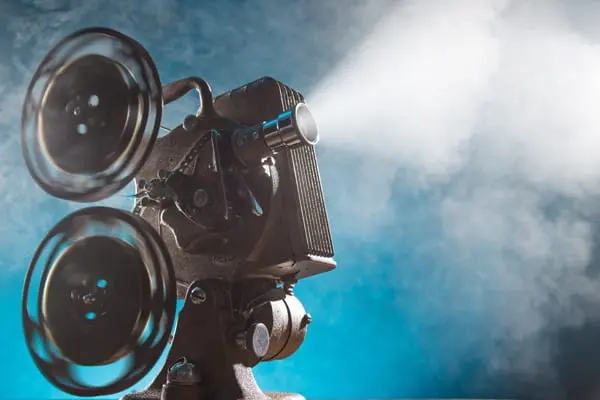
A real time transfer uses a special type of projector and a video camera. With a regular video camera, picture quality is reduced by at least 30%
- Before getting started, have your subjects acquainted with their roles in each scene. Then, make a run through of everything.
- Next, make sure to shoot great angles and close ups.
- Third, be ready to catch the expressions and reactions of the subjects.
- And lastly, take coverage of the surroundings, whether it is a book, movie poster, insect, or running water. It is important to include the surroundings to make each frame more interesting.
There are different processes involved in filming. Anamorphic is a process of filming that produces top quality resolution with a ratio of 2.35:1. In this type of filming, there is no need to use digital or optical enhancement or editing, because the film’s negatives can be printed based on how you want the frames to appear. Hard-matting is a technique of filming where two images are combined during the actual filming to form an entirely different image with sharp frames. Soft-matting is also a technique that combines different images in a way similar to hard-matting, except that this process is done in the theater with the projectionist placing the camera aperture away from the focal point to create soft edges.
When you want to transfer a film to a video, you can use either one of the three processes: real time, frame-by-frame and through a film scanner. A real time transfer uses a special type of projector and a video camera. It is easy enough to use for filming at home by anyone. However, with a regular video camera, picture quality is reduced by at least 30%, with dull colors and blurred pictures. A frame-by-frame transfer uses a video camera to take a live feed by syncing it to a computer. As a result, each frame is transferred as it is being shot. This process is longer and requires more sophisticated equipment. The use of film scanners to transfer film is the best kind of channeling process, because it involves a scanning device to transfer shots, providing clearer and sharper images.
There are other tools that are needed in transferring film to video, such as a telecine transfer box and a multiplexer. Transferring film to video or creating still shots to produce movie posters is not a very complicated process. With the right amount of practice and information, anyone can do it, even without the help of a professional. Besides, there is a lot of information on how to shoot a film which you can use so you can make better films.
Meeting Tomorrow provides organizations and businesses with such solutions as: video equipment rental solutions, Mac rental solutions, and video camera rental solutions. We also rent projector solutions.
Related Articles: Computers for Adults Over 50 | Checking Laptop Temperature | Making a Conference Call | Writing Meeting Minutes |Using Tablet PCs